

Léon-Yves Bottou
(Research Scientist, Flatiron Institute)
Bio: Léon Bottou received the Diplôme d’Ingénieur from l’École Polytechnique (X84) in 1987, the Magistère de Mathématiques Fondamentales et Appliquées et d’Informatique from École Normale Supérieure in 1988, and a Ph.D. in Computer Science from Université Paris-Sud (now Université Paris-Saclay) in 1991. His research career has spanned leading research institutions: he held positions at AT&T Bell Laboratories, AT&T Labs Research, NEC Labs America, Microsoft Research, Facebook AI Research, and, since February 2026, the Flatiron Institute. He received the 2007 Blavatnik Award for Young Scientists in 2007 and the Lagrange Prize in Continuous Optimization in 2021.
The unifying theme of Léon Bottou’s research is the pursuit of a deeper understanding of intelligence through theoretical and applied contributions to machine learning since the late 1980s. His work encompasses early deep learning systems, stochastic gradient learning algorithms, statistical analyses of learning architectures, structured-output computer vision, and the theory of large-scale learning. Today, he seeks to understand the interplay between learning, reasoning, and intelligence, a challenging topic with growing importance and urgency.
Title of talk: The Fiction Machine
Abstract: Imagine a machine that can read a story and generate a meaningful continuation, that is, one that complies with the narrative demands of the story and makes sense to a meaningful fraction of the readers. Because what is true in the world of the story needs not be true in our world, this machine cannot be expected to say the truth. It only knows narrative necessity. This machine is of course an idealized model of modern AI systems, from language models and chatbots to movie generation. It is also an opportunity to formulate important questions and sometimes catch a glimpse of their answers. How can we define such a machine more rigorously? What can it compute? How does it compare to logic and mathematical reasoning? Can it be used to make inferences about our world even though its output is not constrained by what is true in our world? Such questions are not only relevant to artificial intelligence, but also useful to understand certain aspects of human intelligence and society.
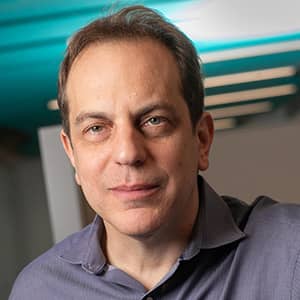
Gil Zussman
(Professor, Columbia University)
Bio: Gil Zussman received the Ph.D. degree in Electrical Engineering from Technion in 2004. He was a postdoc with MIT from 2004 to 2007. He has been with Columbia University since 2007, where he is currently the Kenneth Brayer Professor of Electrical Engineering, a Professor (affiliated faculty) of Computer Science, and the Electrical Engineering Department Chair. His research interests include networking, in particular in the areas of wireless, mobile, and resilient networks. He is a member of the American Academy of Sciences and Letters (AASL), an IEEE Fellow, received the Fulbright Fellowship, two Marie Curie fellowships, the DTRA Young Investigator Award, and the NSF CAREER Award. He is a co-recipient of nine paper awards and was the TPC Chair of IEEE INFOCOM 2023 and ACM MobiHoc 2015.
Title of talk: The COSMOS Testbed – a Platform for Advanced Wireless, Optical, Edge Cloud, and Smart Streetscapes Experimentation
Abstract: This talk will provide an overview of the COSMOS testbed (https://cosmos-lab.org), that is being deployed as part of the NSF Platforms for Advanced Wireless Research (PAWR) program and of its use for experimentation within the NSF Center for Smart Streetscapes (CS3) (https://cs3-erc.org). We will first briefly present an overview of COSMOS (Cloud-Enhanced Open Software-Defined Mobile-Wireless Testbed for City-Scale Deployment) that is being deployed in West Harlem (New York City) and its recent expansion via the NSF COSMOS^3 project. COSMOS’ key enabling technologies include mmWave radios, optical/SDN x-haul network, and edge cloud. It targets the technology “sweet spot” of ultra-high bandwidth and ultra-low latency, a capability that will enable a broad new class of applications including streetscape applications. Realization of such high bandwidth/low latency wireless applications involves research not only on radio links, but also on the system as a whole including aspects related to spectrum use, networking, and edge computing. Then, we will describe various experiments that have been conducted in the testbed, and particularly its support of research within the CS3 Engineering Research Center (ERC). Specifically, we will focus on research in the areas of edge cloud, smart intersections, and optical communications/sensing. Finally, we will briefly discuss the expansion of the infrastructure to support quantum networking.
The COSMOS testbed design and deployment is joint work with the COSMOS team and some of the discussed research results are in collaboration with Abhishek Adhikari, Alon Levin, John Drogo, Mahshid Ghasemi, Dror Jacobi, Manav Kohli, Jhonatan Tavori, Shivalee Shah, Javad Ghaderi, and Zoran Kostic.
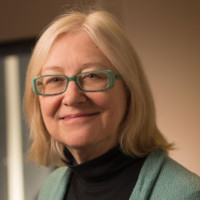
Julia Hirschberg
(Professor, Columbia University)
Bio: Hirschberg is Percy K. and Vida L. W. Hudson Professor of Computer Science at Columbia University. She has served on boards of ACL, ISCA, CRA-WP, NAACL, CRA, AAAI Council, and IEEE SLTC, is a fellow of AAAI, ISCA, ACL, ACM, and IEEE, and a member of the NAE, American Academy of Arts and Sciences, American Philosophical Society, National Academy of Artificial Intelligence, Austrian Academy of Engineering and European Academy of Engineering, received the IEEE James L. Flanagan Speech and Audio Processing Award, the ISCA Medal for Scientific Achievement and Special Service Medal and the ACL Dragomir Radev Distinguished Service Medal.
Title of talk: Detecting Deceptive Speech
Abstract: Multimodal deception detection was supported for our group after 9/11 by a new Department of Homeland Security. The questions they wanted us to focus on were: What aspects of human behavior are valid indicators of deception? Can we create reliable automatic deception detection models to identify future terrorists? We had later support from the Air Force Office of Scientific Research focuses on identifying human trust as well deception: What aspects of human speech are trusted by other humans? What are mis-trusted? Can we build good trust models to identify and to generate trusted speech?